
Hours
Wednesday – Saturday 10am to 4pm
Sunday Noon to 4pm
The museum is closed on all major holidays.

Admission
Adults: $10.00
AAA Members: $9.00
Children 7 - 16: $5.00
Children 6 & under: FREE


Before the Smoke Alarm: Fire Safety in the 1800s
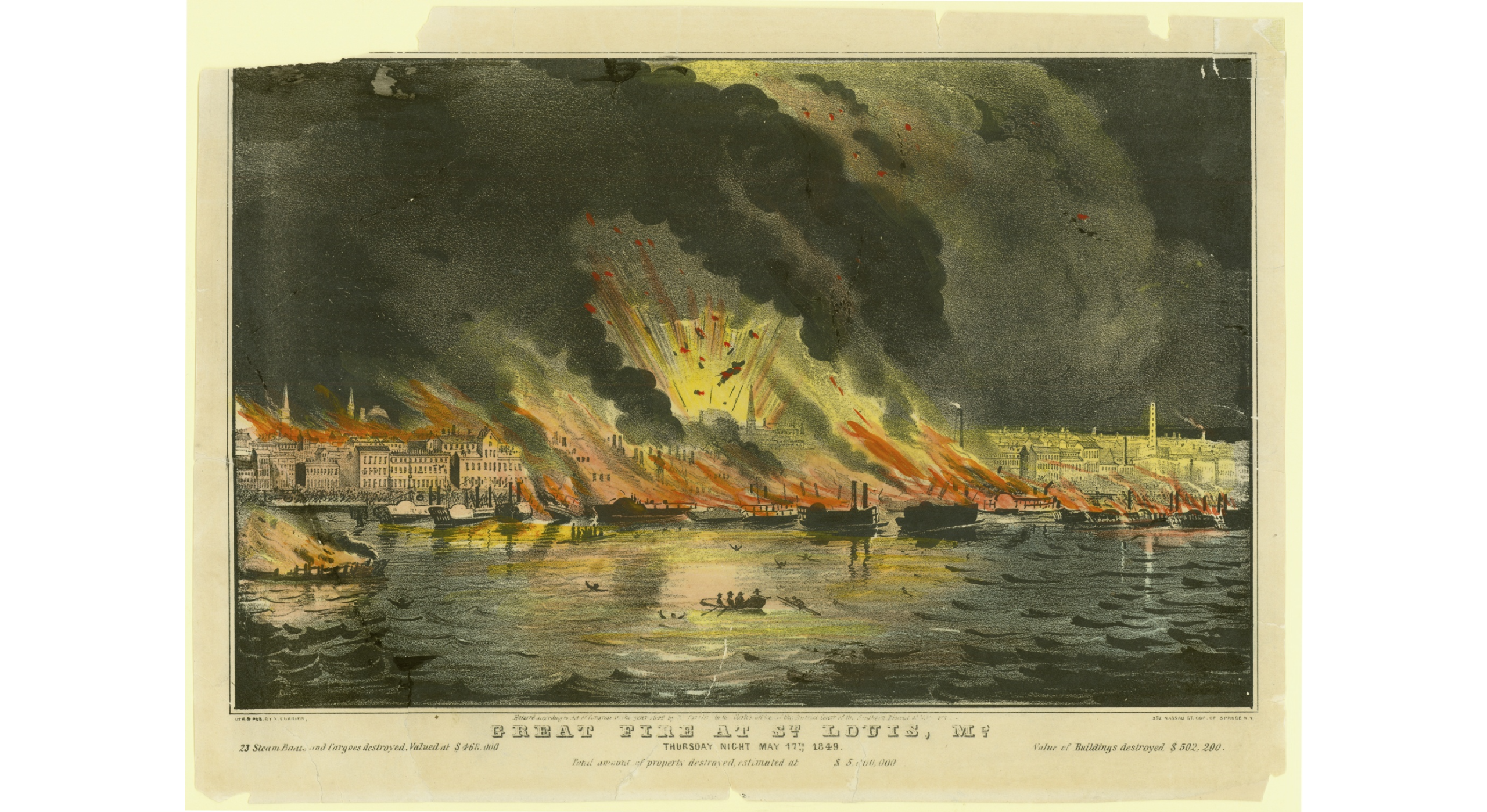
The Great Fire of St. Louis – 1849 (Courtesy of Missouri Historical Society)
In the Victorian era, home safety was much less regulated than it is today. Fire escapes and extinguishers were not common, meaning the risk of disasters was significant. What kind of risks did homes like that of the Field’s have, and what precautions did they take?
Open flames were common around Victorian homes. Before electric or gas lighting and heating, candles and oil lamps were some of the only ways to see past sunset, and fireplaces were the most common way to heat homes. This presented a problem, as most of the furnishings in homes of this period were made of untreated cloth and wood, leading to an increased risk of fire spreading if open flames were unattended. In fact, most house fires were a result of candles being left near flammable material.
Cooking over an open fire, or using wood or coal stoves, was the only way to heat food in Victorian homes before gas or electric appliances. If these fires were not constantly watched, they could be even more dangerous than the flame from a candle. To mitigate the dangers of cooking, the kitchen in the Field family home was set up in a connected building in the backyard called the flounder, or half-house, along with a dining room and space for hired servants to move about. If the flounder caught fire, it would have been harder to spread to the main house. Unfortunately, the flounder of the Field family home is no longer standing, as it was torn down in 1919.
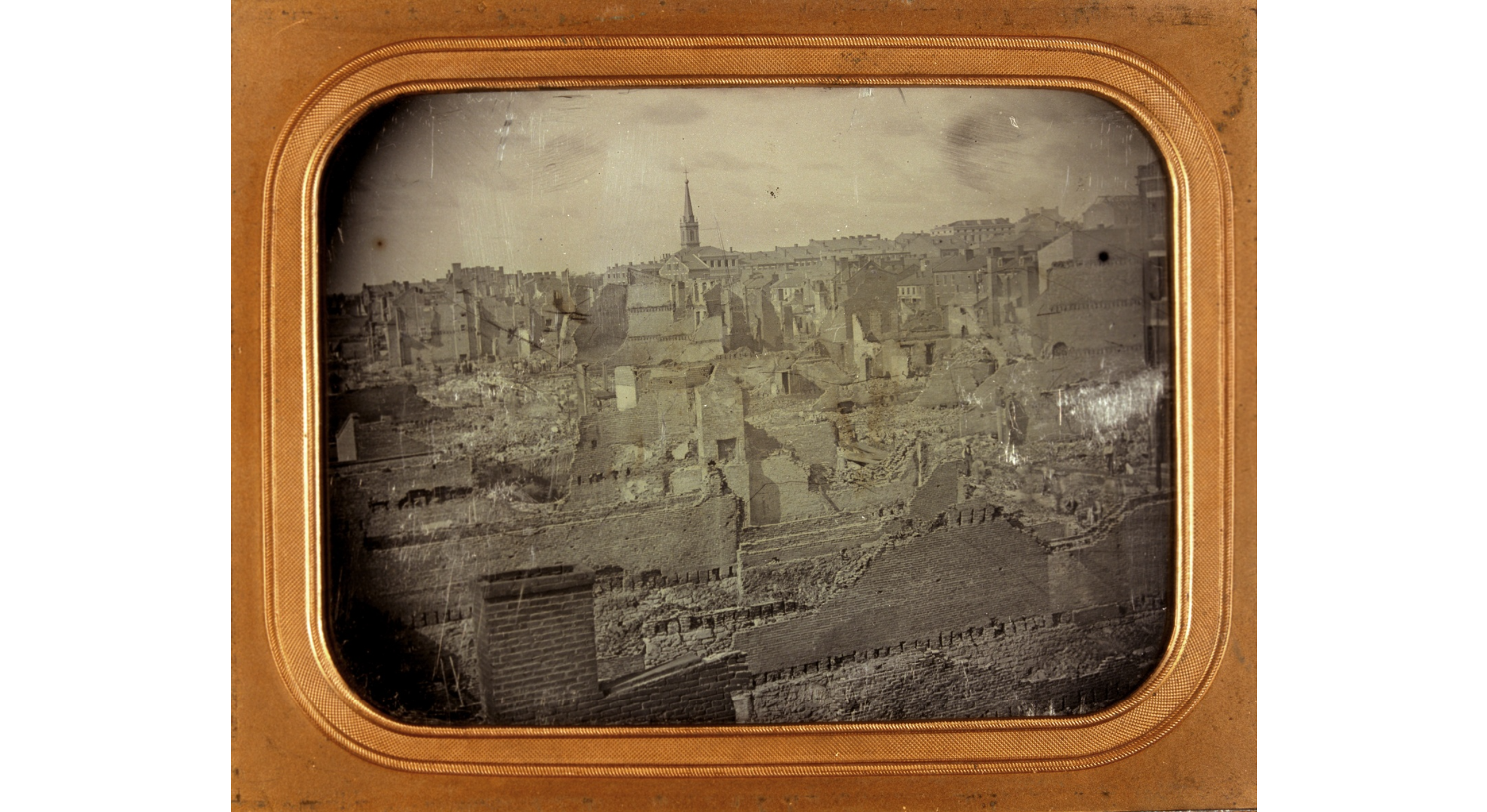
The Aftermath of the Great Fire – 1849 (Courtesy of Missouri Historical Society)
Another origin of large unwanted fires was the poor sanitary systems. Before modern plumbing, sewer systems would build up gases, such as methane, from human waste. Without a way to suck these gases away through pipes, they would come back up through toilets. If a source of flame were brought near a particularly dense cloud of flammable gas, it would result in a dangerous eruption and an ensuing fire. In certain places, most popularly England, special street lamps were powered by this sewer gas and worked as a way of releasing it, decreasing the danger of fires and explosions.
When uncontainable fires did inevitably occur, means of putting them out were not uniform. Originally, lines of people passing buckets of water from a well to the fire were the most common way to stop the spread. This apparatus was rather crude and ineffective, but the first chemical fire extinguishers were not common in houses during the time, even though they did exist. The precursor to the iconic hosed red cylindrical extinguishers that you most likely recognize in almost every building today was not commonplace in private homes until the 1950s.
House fires, while dangerous and tragic, were not limited to one building. During the height of the Victorian era in St. Louis, houses like that of the Field’s were tightly lined up, with no space in between. If a fire were to break out in one home and wasn’t quickly handled, it could very easily get out of hand. In 1849, a steamboat in St. Louis caught fire, which quickly spread to other boats, the wharf, and eventually the city. Most of the damage was due to the fact that so many buildings were very close together and had been built using wood. After the fire, the city was rebuilt using brick. One of the surviving buildings was the Field home, and you’ll be able to see some of the contemporary brick used in its construction when you take a tour. The Field family home is one of the last remaining buildings from the pre-fire era, as most of them were knocked down to make way for highways and newer establishments. The buildings that came up after the fire were designed with fireproofing in mind.