Hours
Wednesday – Saturday 10am to 4pm
Sunday Noon to 4pm
The museum is closed on all major holidays.
Admission
Adults: $10.00
AAA Members: $9.00
Children 7 - 16: $5.00
Children 6 & under: FREE


Faces of the Field Family: Portraits in the Field House Museum
If you tour the historic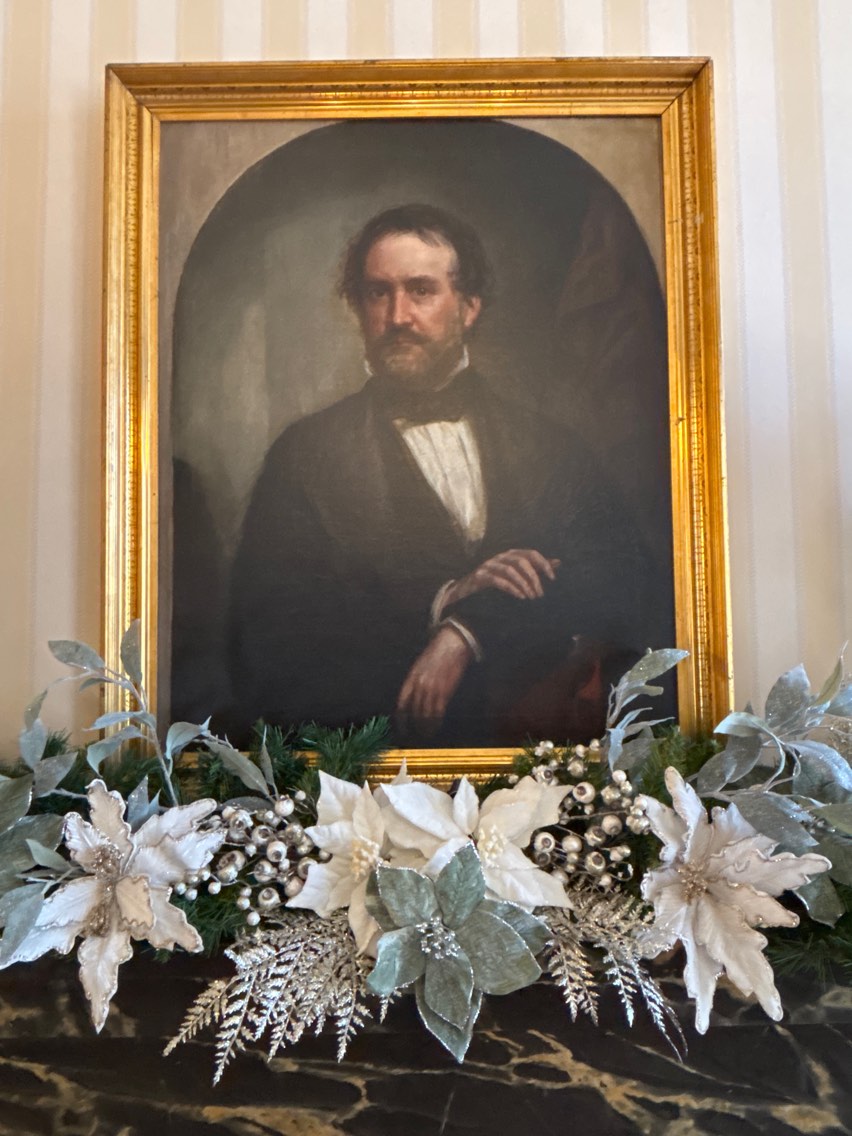 Field family home, you may notice four distinct portraits throughout: two in the parlor and two on the second floor. On the first floor hangs a striking depiction of Roswell Field, dressed in a black suit with a bow tie. This portrait was created in 1850 by Chester Harding, an American artist born in Massachusetts in 1792, known for his portraits of prominent figures in American and English culture and politics. His works include three U.S. presidents, and he is the only documented artist to have painted Daniel Boone during his life. Harding would pass away 16 years later in 1866.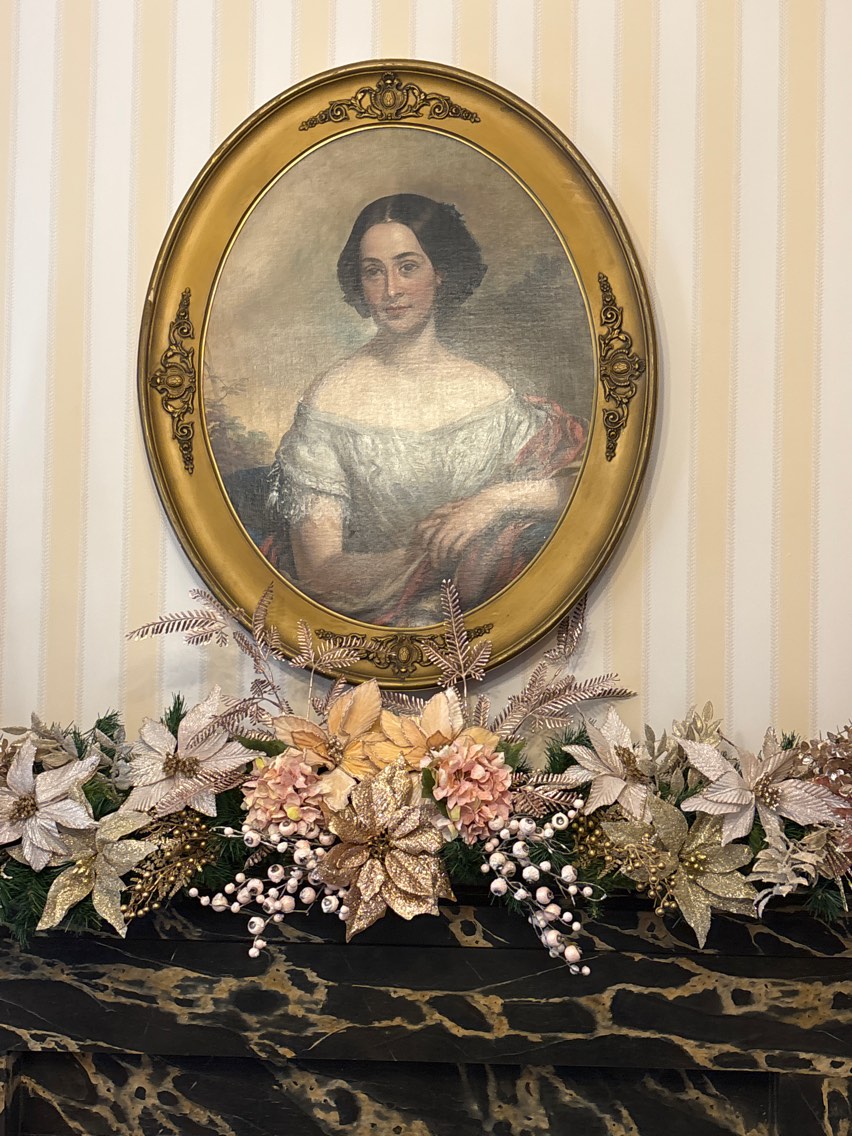
To the left of the men’s parlor is the ladies’ parlor, where the women would sit and socialize. On the fireplace wall sits a portrayal of Frances Reed Field, wife of Roswell Field. This rendering was painted by Manuel Di Franca, a Portuguese American painter, in 1856. Di Franca was born in Portugal in 1808, where he became a revolutionary in his later youth against the Portuguese government. He was sentenced to death but was placed aboard a ship and smuggled to Philadelphia by his friends. After landing, he studied to become an artist and died in 1865 in Saint Louis, Missouri.
On the second floor are two representations of Eugene Field, one with him sitting in a chair with a stoic expression, resting his face on his right hand, and marking his spot in a book with his left. A vibrant green ring is on his left ring finger. The painting was created by August Franzen, a Swedish painter who was active in New York in 1895. The painting hung for many years in an elementary school in California named for Eugene Field. When the school closed in the 1950’s, the 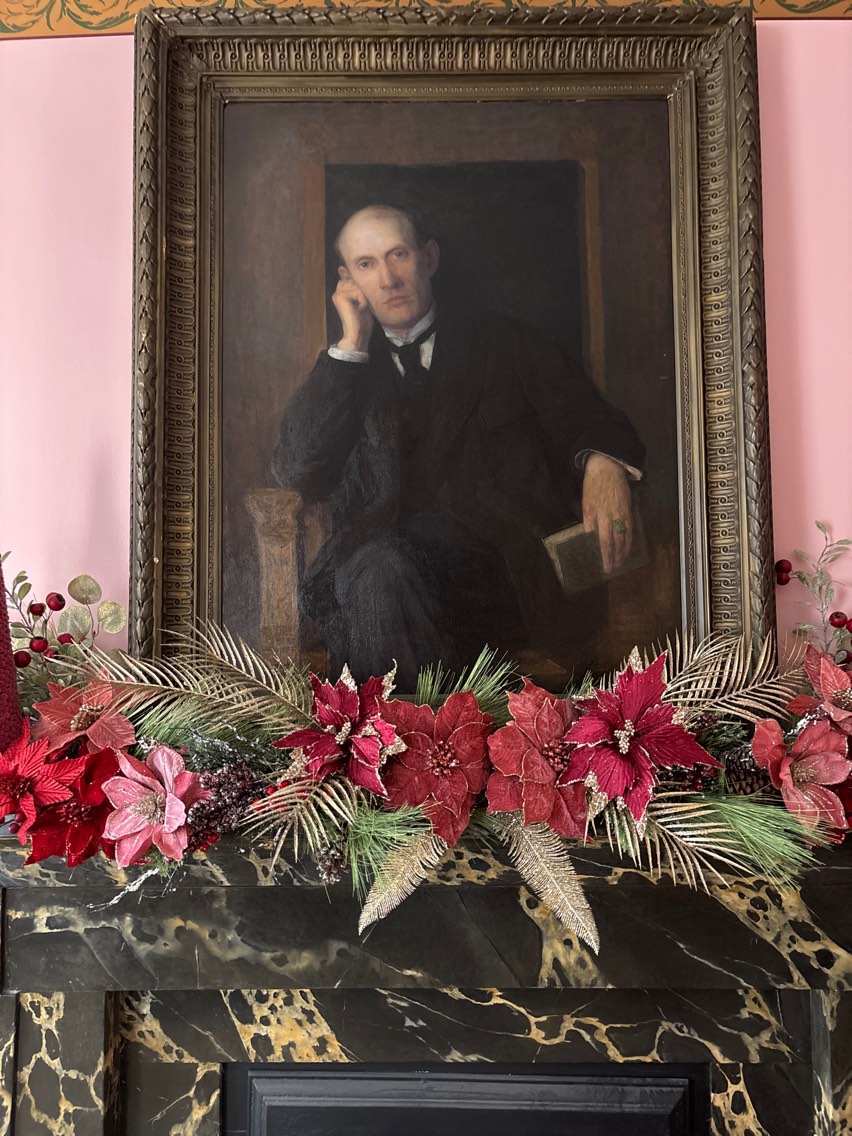 painting was donated to the Field House Museum where the work was restored and the green ring uncovered, previously painted over with a wedding ring by Eugene’s wife, Julia Comstock.
The second piece, which shows Eugene with a content expression, looking to the upper left of the viewer in a suit and tie, was painted by John Mulvany in 1896, a year after Eugene’s death. Mulvany was an Irish-born painter famous for works such as Custer’s Last Rally (1881) and for his recording of the American Civil War through his art. During Mulva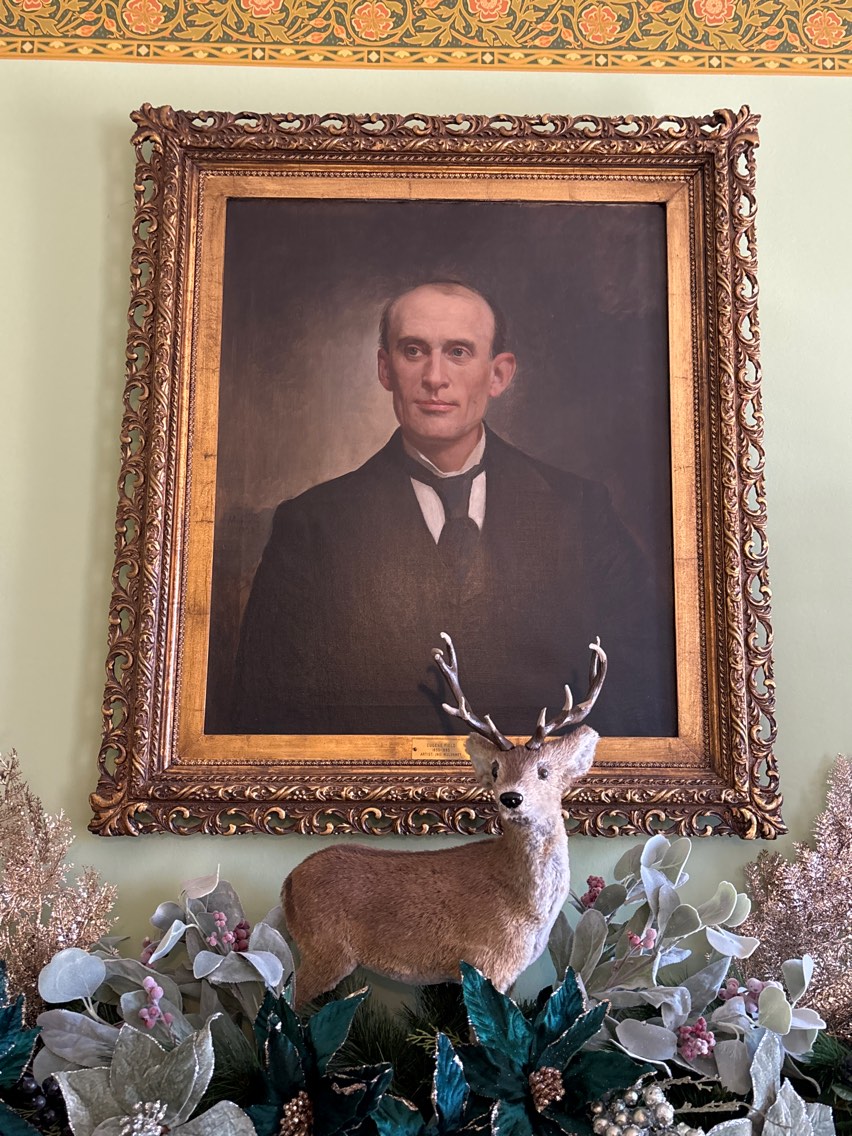 ny’s lifetime, he lived in three different cities of which Eugene Field was also a resident, including St. Louis, Missouri, Kansas City, Missouri, and Denver, Colorado.