
Hours
Wednesday – Saturday 10am to 4pm
Sunday Noon to 4pm
The museum is closed on all major holidays.

Admission
Adults: $10.00
AAA Members: $9.00
Children 7 - 16: $5.00
Children 6 & under: FREE


Domestic Life in 1850’s St. Louis
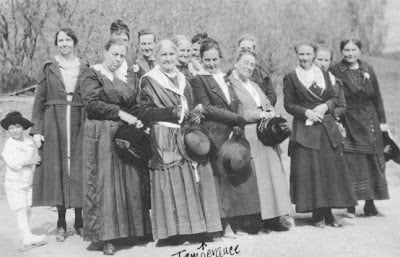
Temperance and some of her daughters and daughters-in-law. Courtesy of the Adventures in History Blog article by Helen Potter Severson, a granddaughter.
During the Victorian era, housekeeping staff were common in family homes, living and working with the family. But how were these laborers treated in houses like the one inhabited by the Field family?
Domestic staff performed all household tasks in the homes where they worked, including washing dishes, cooking meals, cleaning rooms, and assisting with childcare. In a larger house, there could be any number of maids, butlers, or other staff, and in places where slavery was legal, many of them were enslaved. In the Field house proper, accommodations were made for a nanny, but in a connective building known as the flounder, or half house, there would have been additional rooms for other employees, a kitchen, and a dining room.
Based on the arrangements set up inside, we can imagine the life the houseworkers would have lived. The nanny’s room was originally a storage closet, also known as a trunk room, placed next to the children’s rooms on the third floor, but it was converted to accommodate house staff for quick access to the nursery. There was enough room for a single bed, a bedside table, and perhaps a trunk at the foot of the bed for storing clothes. The space is considerably smaller than the other bedrooms, with little room for personal belongings. Bedside objects might have been a water pitcher and a candle.
In some Victorian houses, there were two sets of stairs, a main staircase and a sequestered one to allow staff to get to different floors without being seen, but in smaller houses such as the one the Fields lived in, there were no such amenities. Instead of a secret stairway, the flounder would have connected to the first and second floors for the staff to move about without being seen by guests. Unfortunately, the flounder has not survived to the present day, and as such, the opening has been replaced with a window. Staff were often housed away from where guests might see them, as the common conception was that they should be out of sight as much as possible. Despite the unequal accommodations, paid domestics were often highly valued and considered part of the family.
A weekly paycheck was paid, which was capable of sustaining a simple houseworker’s life. The weekly salary might have been $3.20 (derived from an average monthly salary of $12.81), which is around $118.82 in 2025. The average weekly salary for a domestic worker in modern-day Saint Louis is $728. While that might seem like a massive discrepancy, today almost everyone has their own place to live, the rent or mortgage of which might take up a lot of the paycheck. Victorian houseworkers didn’t have to worry about rent; a stable place to live was included in the job.
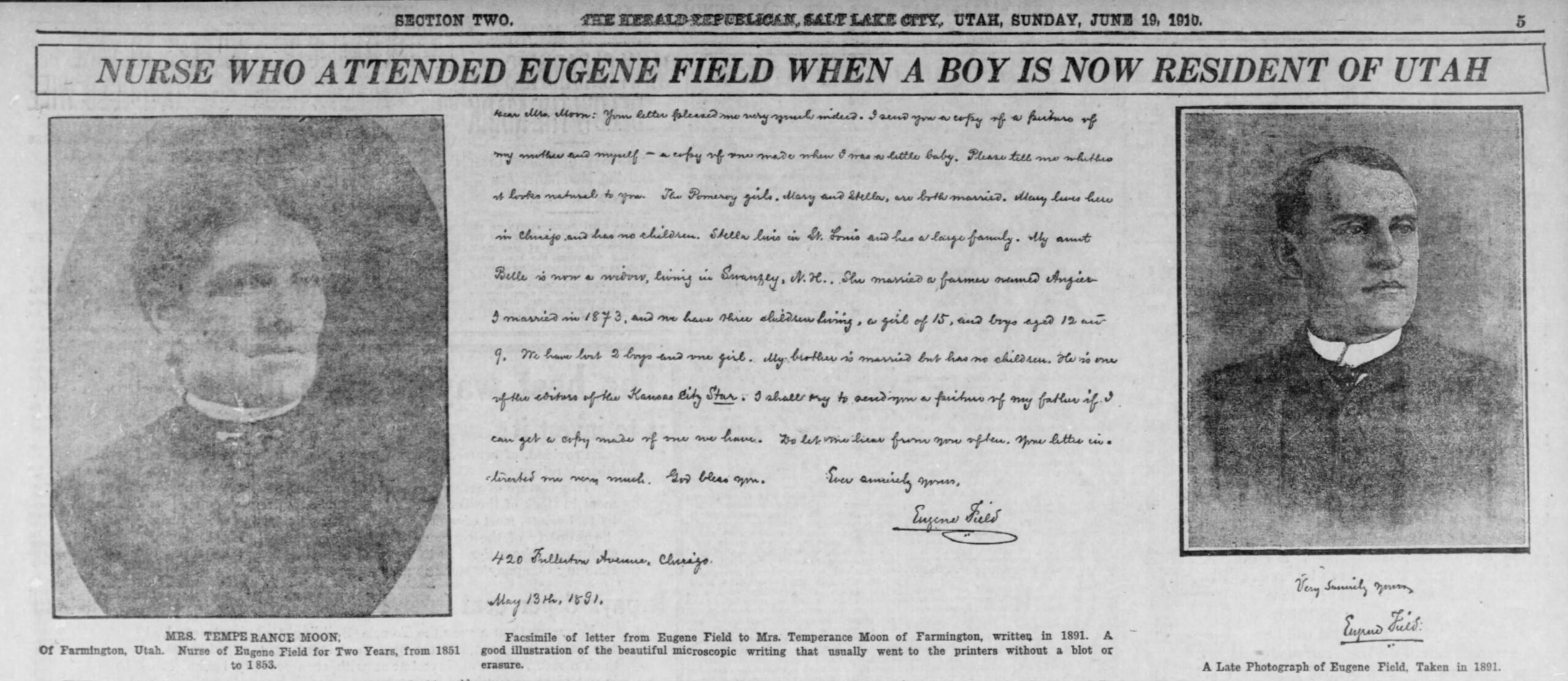
Clipping from Salt Lake Herald, June 19, 1910.
We know the story of two of the staff at the Field House: Temperance and Mercy Westwood, the nanny and the cook, respectively. The Westwood sisters were from a large English family who, after hearing sermons by Mormon preachers, made a pilgrimage to the United States. The Westwoods’ journey was tragic, resulting in the death of their mother, father, and three siblings along the way to Saint Louis, leaving behind seven orphans. The children spread out to find jobs, leading sixteen-year-old Mercy Westwood to the Fields’ residence, where she was employed as a cook. Temperance later came to visit her older sister at her job and met the infant Eugene Field. Mentioning her desire for work, Mrs. Field hired the ten-year-old Temperance as a full-time nanny. Temperance was very close to the young Eugene, indulging his obsession with fairy tales by buying stories to read to him, which they both loved. After about four years, Temperance moved on in her journey and traveled to Utah with her brother, where she made a family. She still loved reading, and her house was full of books despite her lack of higher education. At some point, she found the poetry of Eugene Field, and after writing to confirm it was the same Eugene she cared for as a child, kept in contact through mail until his death. She lived amongst her children in Utah until she died in 1922.